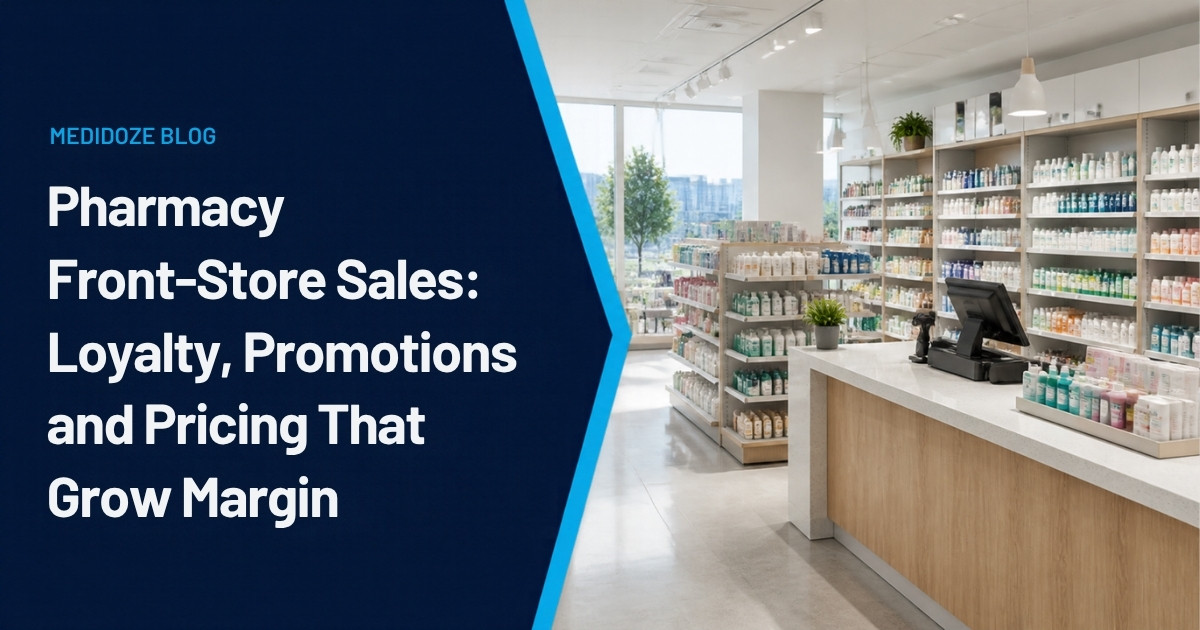
Prescriptions bring patients through the door. The front store is where a pharmacy can grow margin on every one of those visits. Better front-store sales come less from bigger promotions than from running loyalty, pricing and promotions properly, and then measuring what works.
Key takeaways
- Every prescription pickup is a front-store sales opportunity, so the till should handle both in one sale.
- A simple points program rewards repeat visits without heavy discounting.
- Schedule flyer prices in the POS so they start and end on time, with no manual price changes.
- Measure promotions by margin, not just units sold.
Why the front store matters
Dispensing fees and reimbursement are largely set by drug plans. Front-store pricing, product mix and promotions are decisions you control. The patients are already in the store for their prescriptions, so the job is making it easy for them to buy what they need while they're there.
Loyalty programs that work
Keep the rules simple
Points per dollar, and a reward patients can understand at a glance. Complicated tiers confuse staff at the till and slow checkout.
Make sign-up quick
Collect only what you need at the counter. If sign-up takes longer than a minute, staff stop offering it.
Use loyalty data carefully
Loyalty shows what customers buy and how often they come back. Use it to plan stock and promotions, and keep patient information protected. In BC, private-sector privacy law (PIPA) applies, and patients expect their health purchases to stay private.
Promotions and flyer pricing
Schedule prices instead of changing them by hand
Flyer prices should be loaded once, start automatically on the first day and end on the last. Manual price changes cause the two most common front-store complaints: the shelf says one price, the till charges another.
Use clear discount rules
"Buy two, get 20% off", "$5 off $30" and member-only prices should be rules in the POS, applied automatically at checkout, rather than staff working them out.
Measure promotions by margin
A promotion that doubles units but halves margin may make less money than doing nothing. Look at margin before and after, and compare it with the same period last year.
Merchandising basics for pharmacies
- Seasonal end caps. Cold and flu, allergy, sun care and back-to-school.
- Near the prescription counter. Items patients often need with their prescriptions.
- At checkout. Small, everyday items.
- Gaps on the shelf cost sales. Accurate inventory and automatic reordering keep fast sellers in stock. See our pharmacy inventory management guide.
The reports to watch
| Report | What it tells you |
|---|---|
| Sales by category | Which parts of the store are growing |
| Margin by category | Where you actually make money |
| Promotion results | Whether a promotion paid for itself |
| Loyalty activity | How often members come back |
| Prescription vs front-store sales | How well pickups turn into front-store sales |
| Slow movers | Stock tying up cash and shelf space |
What your POS needs for front-store growth
- One sale for prescriptions and front-store items together
- Loyalty points applied automatically at checkout
- Discount rules and member prices
- Scheduled flyer pricing
- Reports by category, margin and promotion
- Consistent pricing across all your stores
A general retail POS can do much of this, but it can't handle the prescription side of the same sale. Our pharmacy POS buyer's guide explains the difference.
How MediPOS grows the front store
MediPOS handles prescriptions and front-store sales in one checkout. Perks points, discount rules and automatic flyer pricing are built in, so promotions start and end on time without manual price changes. Fifteen built-in reports show sales, inventory and staff activity, and multi-store groups keep pricing, promotions and reporting consistent across locations. Because MediPOS is fully compatible with WinRx, prescription pickups and front-store sales go through the same till.
Book a free 20-minute demo on your own workflow, then try MediPOS free for 30 days.
Frequently asked questions
How can a pharmacy increase front-store sales?
Handle prescriptions and front-store items in one checkout, run a simple loyalty program, schedule flyer pricing in the POS, keep fast sellers in stock, and measure promotions by margin.
What makes a good pharmacy loyalty program?
Simple rules, quick sign-up at the counter, rewards customers understand at a glance, and careful handling of their information.
How should a pharmacy measure promotions?
Compare margin, not just units sold, against the period before the promotion and the same period last year.
Does MediPOS support loyalty and flyer pricing?
Yes. MediPOS includes Perks points, discount rules and automatic flyer pricing, and works with WinRx for prescription pickups at the same till.